
Decision guide · 7 min read
Repair or replace a Sub-Zero during a Pleasant Hill remodel
Many Pleasant Hill kitchens have a 15-to-20-year-old built-in Sub-Zero hitting the remodel decision. A cost-and-evidence framework for keeping it, fixing it, or letting it go.
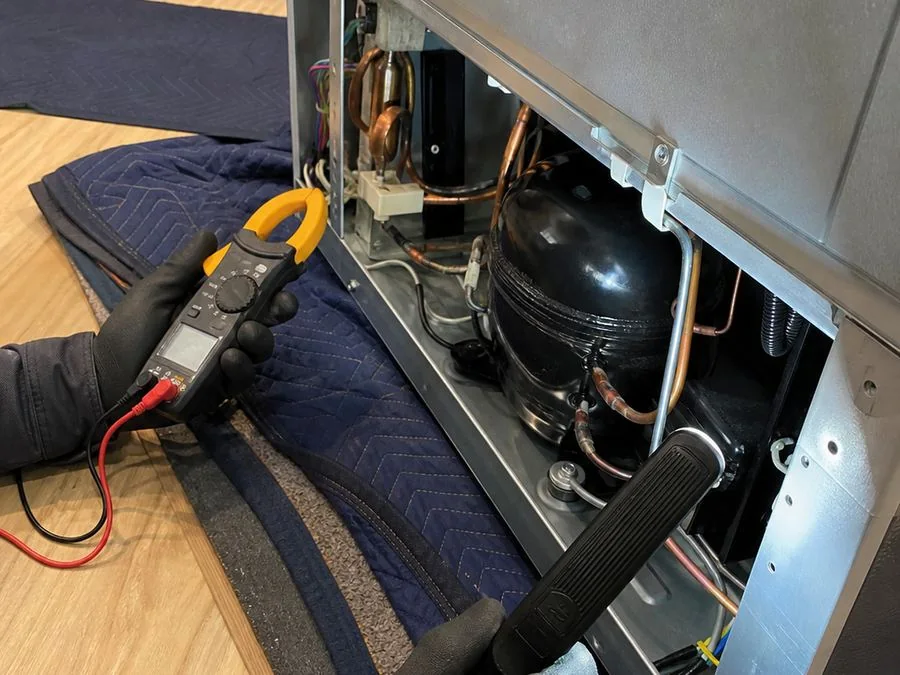
A lot of Pleasant Hill homes — the ranch and split-level houses around Gregory Gardens, Poets Corner and the streets off Contra Costa Boulevard — went in with high-end kitchens in the late '90s and 2000s. That puts a wave of built-in Sub-Zeros right at the fifteen-to-twenty-year mark, which is exactly when a kitchen remodel forces the question: keep it, fix it, or replace it.
The honest answer almost never comes from the age or the brand alone. It comes from four things you can actually weigh. Here is the framework we walk Contra Costa homeowners through on the visit.
Start with what actually failed
A Sub-Zero built-in is engineered to run fifteen to twenty years, and most of what goes wrong on it is bounded and well-stocked: an evaporator fan, a tired door gasket, a clogged condenser, a control board, a fill valve, an ice-maker module, a stuck damper. Any one of those is a clear repair on an otherwise sound unit — fix it and the fridge has years left. None of those is a reason to spend five figures on a replacement.
The sealed system is the real fork in the road
The expensive failure is the sealed system — a refrigerant leak or a failing compressor. On a newer unit we put gauges on it, show you the pressures, and it's almost always still worth repairing. On a twenty-year-old unit that's also on its second control board and a worn gasket, a major sealed-system repair is where the math can flip toward replacement. We'll show you the actual readings behind that call rather than guessing from the model number.
Factor in the cabinetry — this is the remodel trap
Here's the part owners miss during a remodel: a built-in Sub-Zero is sized to its surround. The newer models often have different dimensions, panel systems and grille heights than a unit from 2005, so 'just swap it' can quietly turn into rebuilding the cabinet opening, the panels and sometimes the countertop above. If the existing unit is mechanically sound, repairing and keeping it can save the cabinetry budget entirely — money better spent elsewhere in the kitchen.
How we keep the recommendation honest
Every quote starts with a real diagnosis — model and serial, temperatures, airflow, and electrical or sealed-system readings as needed — not a sales pitch. The $89 diagnostic goes toward the repair if you proceed, and the work is backed by our 365-day warranty on parts and labor. We'd rather tell you a sound unit has years left, or that an old one facing a major repair has genuinely reached the end, than sell you the wrong answer. Call (925) 940-3576 or book online to get the numbers for your unit.
FAQ
Questions & answers
My Sub-Zero is 18 years old. Should I just replace it during the remodel?
Not automatically. Age alone doesn't decide it — these units are built for the long run. If it only needs a bounded repair and the cabinetry already fits it, keeping it often saves both the unit cost and the cabinet rebuild a new size would force. We diagnose it first and show you the readings.
Why would a replacement cost more than the new fridge itself?
Because a built-in is sized to its surround. A current model can differ in height, depth, panel and grille design from one installed in the 2000s, so fitting it can mean modifying or rebuilding the cabinet opening and countertop above — costs that don't show up on the appliance price tag.
Will you ever tell me to replace it?
Yes, when the evidence says so — typically an older unit facing a major sealed-system repair on top of other worn parts. We show you the pressures and readings behind that recommendation so the decision is yours, made on facts.
Guides
More Pleasant Hill guides
- Wine storage guide · 6 min Why a Sub-Zero wine column drifts warm in Pleasant Hill A Sub-Zero wine column that creeps above its set point in a hot inland Pleasant Hill kitchen is usually airflow, a dual-zone sensor, or a tired seal — not a dead compressor. What goes wrong and how it's diagnosed. Read the guide →
- Seasonal guide · 5 min What a Pleasant Hill summer does to a built-in Sub-Zero Inland Diablo Valley heat pushes a built-in Sub-Zero harder than the coastal Bay. What the dry 95-degree afternoons do to the condenser, and the one habit that prevents most July breakdowns. Read the guide →
- Wolf guide · 4 min Wolf oven baking unevenly in a Pleasant Hill kitchen? Start here A Wolf oven that browns unevenly or runs hot is usually calibration or a tired sensor, not a dead control board. What it means and how it's diagnosed in Pleasant Hill kitchens. Read the guide →
Rather leave it to a specialist?
Call the Pleasant Hill desk for diagnostic-first booking and a clear price before any work begins.