★★★★★ Homeowner, Sherman Acres
Our 650 refrigerator side climbed to 48 F while the freezer held at 2 F. He measured both zones, found the evaporator fan failing and cleared a blocked air return. The fresh-food side was back to 37 F that same night.

Field board
Emergency triage Fresh-food vs freezerAirflow before compressorFood-safety urgencyNot-cooling hub
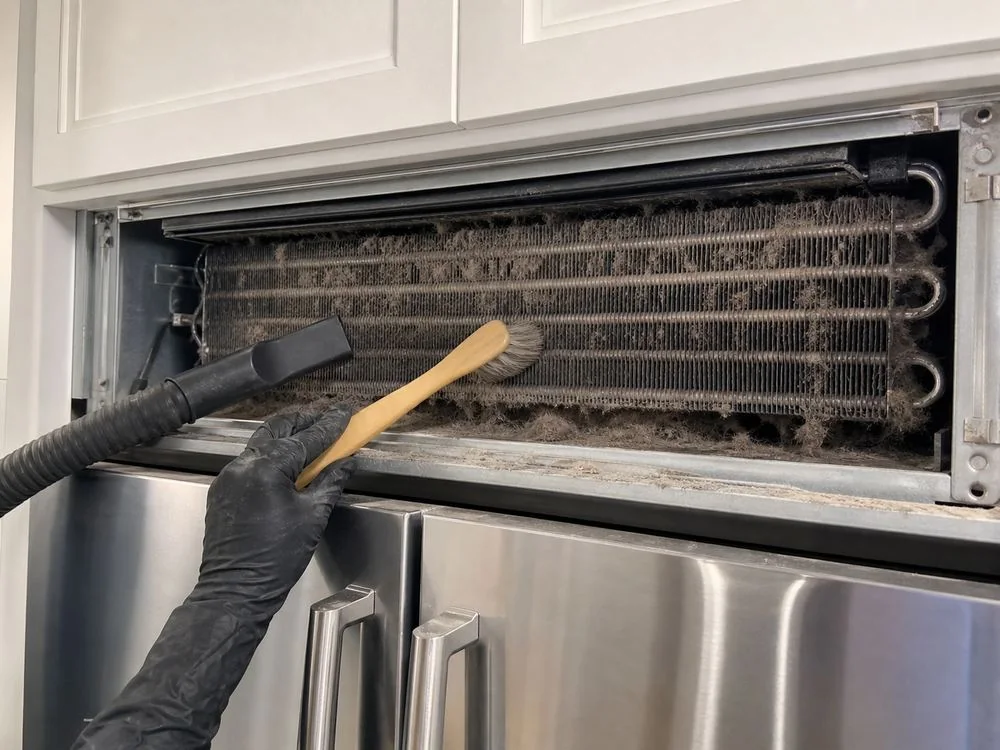
When a Sub-Zero is not cooling in Pleasant Hill, first record the fresh-food temperature, freezer temperature and whether either zone is still recovering. A warm fresh-food side with a cold freezer points to a different test path than both zones warming. The useful first visit checks condenser airflow, fan behavior, door compression, thermistors, display alarms and model-family evidence before any compressor conclusion.
Pleasant Hill Sub-Zero Repair records the fresh-food and freezer split, then checks condenser airflow, the evaporator fan and door compression before any compressor talk, serving Sherman Acres and 94520. Is your refrigerator warming above 42 F while the freezer stays cold? Call (925) 940-3576 for a same-day not-cooling diagnostic.
Practical facts
Price table
| Service / symptom | What is included | Price range | Timing |
|---|---|---|---|
| Fresh-food warm, freezer holding | Independent temperature readings, door closure check, evaporator fan, damper and thermistor evidence. | $125-$195 diagnosis; $350-$1,250 if parts follow | 1-4 hours |
| Both compartments warming | Food-safety triage, condenser airflow, compressor draw, control path and sealed-system screening. | $125-$195 diagnosis; $1,300-$3,300 if sealed-system proof follows | 2-6 hours plus parts |
| Runs constantly in afternoon heat | Lower grille inspection, condenser dust removal, fan operation and recovery trend. | $125-$195 diagnosis; $242-$579 maintenance/access if no part fault | 60-120 min |
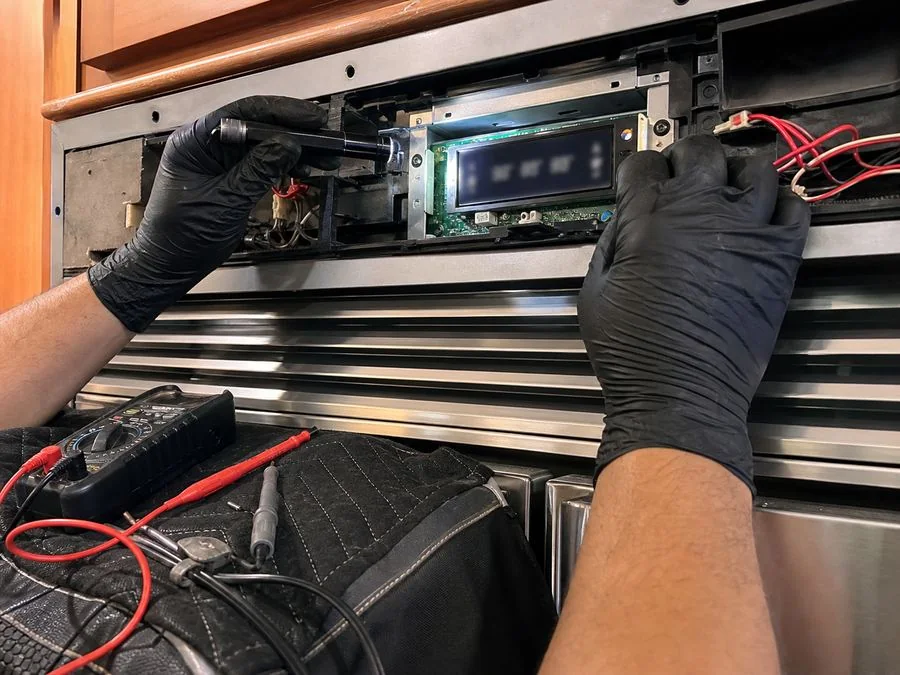
| Intermittent alarm with stable temperatures | Code photo review, sensor comparison, board evidence and trend check before reset. | $125-$195 diagnosis; $350-$1,250 electrical path | 1-3 hours |
| Frost blocking airflow | Frost pattern photos, door seal test, defrost evidence and liner-safe handling. | $350-$850 gasket/defrost path | 1-3 hours |
| Warm unit after cabinet movement | Level, reveal, grille clearance, fan noise and reseat verification. | $207-$579 access impact plus repair range | Adds 30-120 min |
The final not-cooling price depends on whether the measured fault is airflow, fan, sensor, control, gasket, cabinet access or a proven sealed-system condition.
Diagnostic steps
Safe owner checks
Check that the doors are fully closed, the setpoints were not accidentally changed, food is not blocking airflow, the lower grille is not visibly blocked and a recent power event did not reset the display. Record the actual fresh-food and freezer temperatures with an independent thermometer when possible. Photograph alarms before clearing them.
Stop repeated resets, stop lowering the setpoint again and again, and stop opening the doors to check by feel. Do not open electrical panels, probe boards, puncture frost, move refrigerant lines or force a built-in cabinet pullout. The goal is to preserve evidence and food safety, not to turn a diagnosable issue into a hidden trend.
Local service notes
| Area | Why it matters |
|---|---|
| Gregory Gardens | Dry-season dust, pet hair and ranch-kitchen lower grilles can restrict condenser airflow and slow recovery. |
| Poets Corner | Older cabinet openings make door reveal and gasket compression checks important when frost appears with warm readings. |
| College Park | Hillside access can limit same-day pullout work; photos of stairs and panels help route the visit correctly. |
| Strandwood | Busy family kitchens often have overloaded shelves, making air-return photos useful before a fan is blamed. |
| Reliez Valley corridor | Larger built-in columns may need model-specific fans or sensors, so model tag photos reduce second-visit risk. |
Profile basis: Pleasant Hill is an inland central East Bay city with warm dry summers, winter fog, ZIP 94523 plus adjacent 94518/94520 routing, older ranch remodels, panel-ready built-ins, hillside access pockets and mixed water/access context around CCWD, EBMUD and Poets Corner irrigation history.
Next step
Use the phone number or external booking page when you are ready to schedule. Have the symptom, current temperatures and access notes ready; the visit starts with diagnostic proof before any repair quote.
Customer reviews
Owners describing warm-compartment calls where temperatures, airflow and fans were checked before sealed-system assumptions.
Our 650 refrigerator side climbed to 48 F while the freezer held at 2 F. He measured both zones, found the evaporator fan failing and cleared a blocked air return. The fresh-food side was back to 37 F that same night.
On a 92 F afternoon the unit ran nonstop and started beeping. He checked condenser airflow, fan draw and the controls before the words sealed system ever came up. A cleaning plus a sensor correction did it, and he verified a solid temperature drop before leaving.
We expected a compressor quote since both compartments were warming. The visit showed a blocked condenser and a weak condenser fan, not lost refrigerant. Once the fan work was approved, temperatures moved from 50 F back toward a safe range within about three hours.
FAQ
A fresh-food section holding above 42 F or a freezer rising above 10 F should be treated as urgent, especially if the trend lasts more than 30 minutes with doors closed. Record both readings before changing settings. Same-day routing is strongest when food safety, active water or repeated alarms are involved.
Yes. Inland East Bay heat plus condenser dust can raise load and slow recovery. That does not prove compressor failure. A technician should document grille airflow, condenser fan operation, amp draw and temperature recovery after cleaning before moving a call into the $1,300-$3,300 sealed-system planning band.
That pattern often points to air movement, evaporator fan, thermistor, damper, door seal or control evidence before compressor work. In a Pleasant Hill built-in, the first useful numbers are fresh-food temperature, freezer temperature and whether the air return is blocked. Many confirmed repairs fall in the $350-$1,250 range.
Photograph the alarm first, then record actual temperatures. Repeated resets can erase timing clues and make an intermittent fan, sensor or board issue harder to prove. If temperatures are unsafe, move food; otherwise preserve the evidence so the visit can narrow the price range without guessing.
Sometimes, especially in dry Pleasant Hill months when dust and pet hair collect behind lower grilles. Cleaning is still not the full answer until recovery is measured. If the unit does not pull toward 37 F fresh-food and 0 F freezer after airflow is restored, fan, control or sealed-system checks continue.
Approve sealed-system testing only after airflow, fan operation, controls and electrical draw have been checked. The reason is cost: proven sealed-system work can plan at $1,300-$3,300, while fan or sensor paths are often much lower. A written evidence path protects against replacing expensive parts too early.